
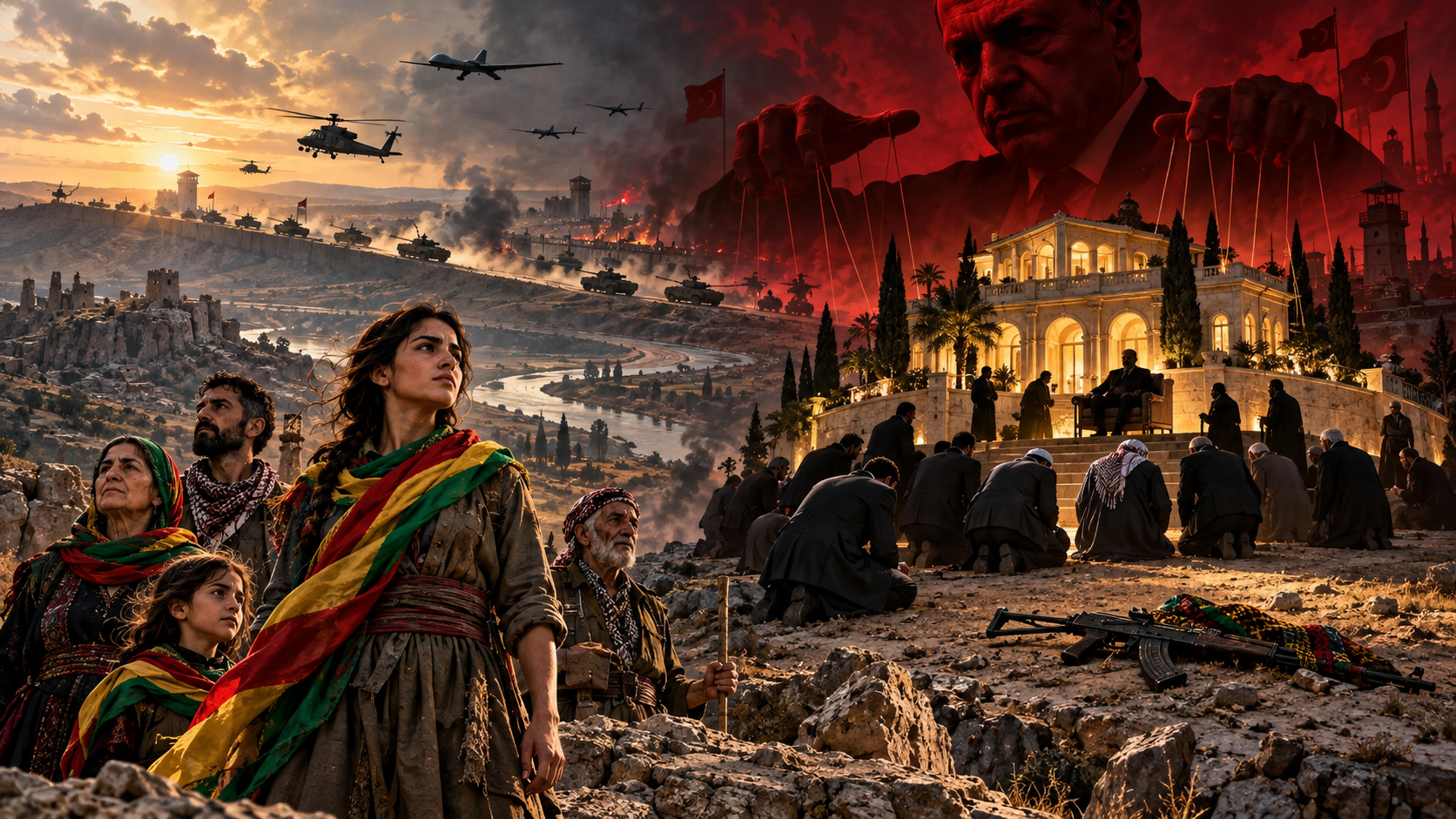
There is an ongoing process between the PKK and the Turkish state in which both sides claim to have emerged as winners. I deliberately do not say “between the Kurds and the Turkish state,” because the Kurds are not fully represented in this process. The PKK and its imprisoned leader are being treated as the counterparts, while virtually nothing is being discussed for the actual benefit of the Kurdish people.
On social media, members of the APO cult claim that they are the winning side. They argue that the PKK has forced the Turkish state to its knees, that the Turkish state will now be compelled to democratize, accept APO’s theses and place him in an important position.
At the same time, members of the APO cult have reduced even slogans about Kurdish freedom to APO’s personal freedom. Propaganda is being pushed as if the Kurdish people themselves demand nothing and care only about APO’s position. The demand directed at the Turkish state has almost been reduced to moving APO into a villa and allowing him to occasionally publish a video in which he insults his own followers. I say this deliberately because I know the reality that almost none of APO’s speeches have been free of insults and abusive language.
On the other hand, while a large part of the Kurdish population neither supports nor believes in empty and meaningless slogans such as “the brotherhood of all peoples” and “equality of peoples,” the PKK acts as if the Kurds fought for the brotherhood of all peoples, as if they went to the mountains for LGBTQ rights, and as if so many Kurdish youths were martyred for that cause. Under the slogan of “brotherhood for everyone,” they defend incoherent and absurd theses that have neither a clear beginning nor an end.
The rest of the Kurdish population, however, appears to advocate that Kurds should first unite among themselves and act in a single direction according to their own interests. At least, a significant part of the visible discourse coming from Southern Kurdistan and Eastern Kurdistan points in that direction.
The Turkish state, meanwhile, with its usual cunning and with policies historically built upon the death and disappearance of the Kurds, keeps Kurds occupied with APO’s status. While Kurds are distracted by these narratives, the Turkish state continues to take steps that increase its own power and authority in Rojava and across the Middle East. At the same time, a large section inside Turkey that opposes this process is sharpening itself as if thirsting for Kurdish blood and is becoming more radical by the day.
If we know even a little about the reflexes of this murderous state, then we know that this order built upon the disappearance of the Kurds may one day return upon those Kurds who are today being distracted in the name of “peace” — once again as bombs, mines and blood.
The status and demands of APO and the pro-APO cult do not serve Kurdish interests or benefit the Kurdish people; they serve only the power of the Turkish state. Kurds did not become martyrs and struggle so that their enemies could democratize; they struggled for a democratic Kurdistan.
Who bent the knee and who remains standing is clear.
Those who laid down their weapons, sold Kurdishness for a villa, abandoned the goal of Kurdistan and shrank themselves into communal groups, equated Kurdish freedom with APO’s status, flattered the Turkish state, transformed Kurdish rights into LGBTQ rights and became political puppets — they are the ones who lost.
But the Kurds and Kurdistan will never be the losers.