In 1999, as a result of the international efforts of the Turkish state, Öcalan set out for the Republic of South Africa, but was captured in Kenya by the intelligence service of the Turkish state and brought to Turkey. Öcalan, who described himself as the leader of the Kurdish movement, as the person who had initiated the armed struggle, and as its ideological mastermind, said the first thing in the airplane when he was brought to the Turkish state: “I am ready to work for the Turkish state.” Although many Kurds at the time saw these words as a tactic to escape the death penalty, today we see quite openly that with this sentence he truly and literally intended to serve the Turkish state.
Although Öcalan stated that he had founded the PKK as a struggle for Kurdish independence, as an effort to drive the occupying states out of Kurdistan, and as a deterrent force against the genocide of the Kurds, all of these were things planned, considered, and attempted while he was still free. As soon as he fell into the position of a prisoner, he had not internalized his struggle deeply enough to position himself precisely against these new discourses.
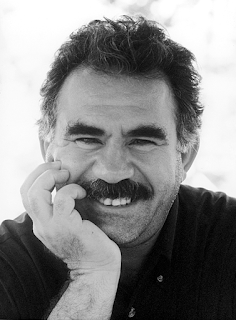
Through ideological writings and books that he is said to have written during his many years of captivity on the island of Imrali — but which, in terms of their foundations and many ideas, rather carry the character of translations of already existing books — he was accepted by the Kurdish people and their elements as the “Leadership” (Önderlik). Until a few years ago, he was always seen as someone who knew everything best; however, as stated, this condition was only valid until a few years ago. Now this perception and acceptance are slowly and profoundly changing.
Today, Öcalan has entered into a “right of brotherhood” with political parties and ideologies that have sworn to destroy the Kurds since their very existence. While, considering his advanced age and situation, a more honorable stance would have been expected from him, he has adopted a position that delivers the Kurds to the Turkish state and tries, through the leadership cult he created, to make the Kurds dependent on their colonial masters and occupiers. He has exchanged the Turkish state, with its bloody hands and dirty mentality of Kurdish genocide, for the Kurds’ desire for independence, and has replaced the idea of Kurdistan, which was his original starting point, with the nonsense that the Kurds are a “civil society.” Imagine that he has fallen so low as to present a kilim to the leader of the MHP, who murdered Kurdish intellectuals, people, children, and women without distinction. To fall from leading an armed struggle into the position of a prisoner who gives a kilim to his murderer is a position into which a person with the idea of an honorable life would never wish to fall. Whereas the morality of the guerrilla has always internalized never deviating from the ideology and, in order not to fall helplessly into the hands of the murderer, keeping a final bullet in one’s pocket to end one’s own life before captivity.
Nelson Mandela, the leader of the Republic of South Africa, to whom Öcalan wanted to go before he was captured, did not bow to the apartheid regime under any circumstances. While he was held prisoner on an island and isolated in solitary confinement, his people strongly resisted the regime they rejected and overthrew it. Afterwards, Mandela stood beside his people as a leader and ended his life as an honorable liberation leader.
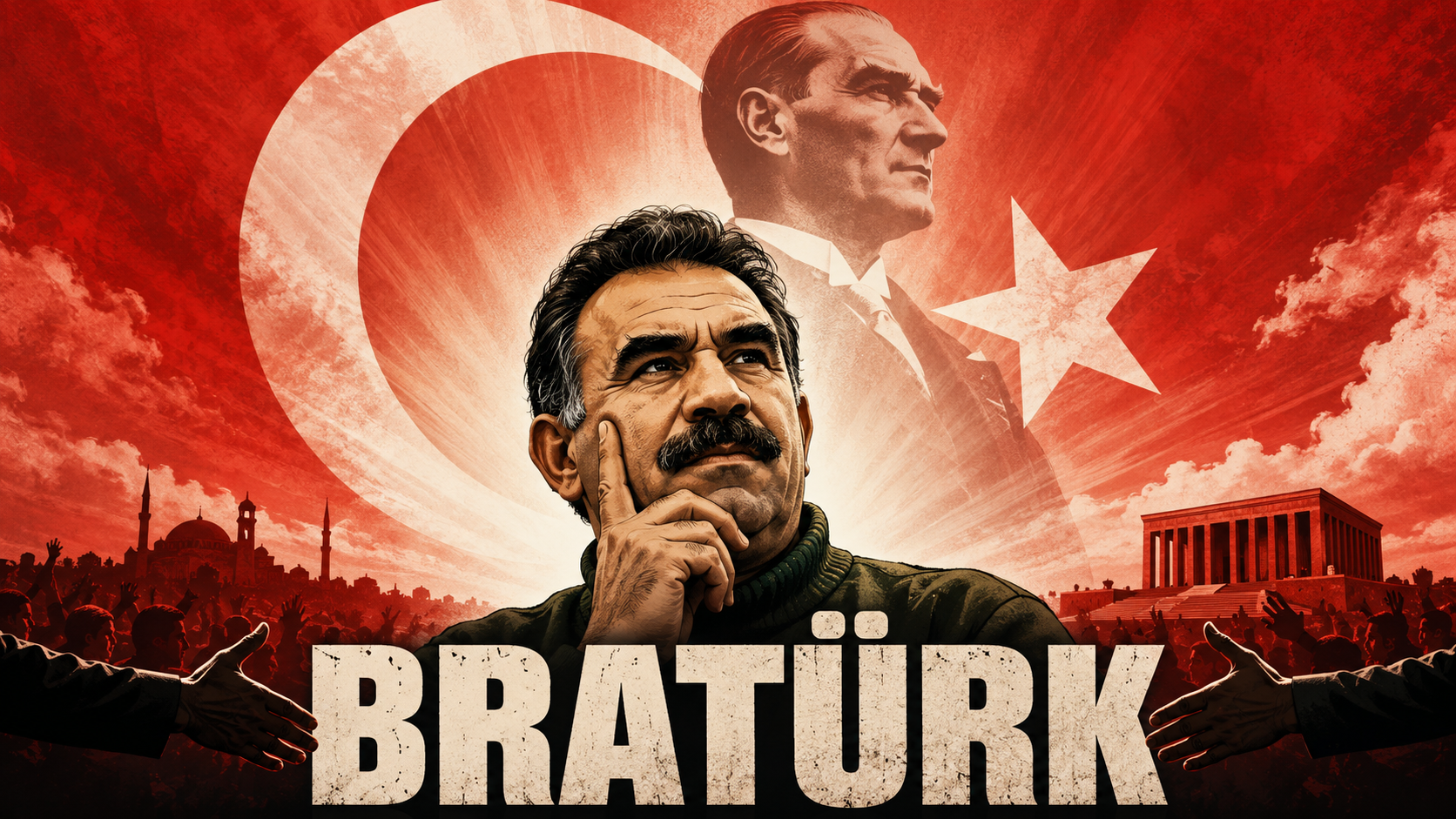
In this case, when Öcalan ends his life, will he be a leader, or will he be remembered as BRATÜRK — as Atatürk’s brother, who after Mustafa Kemal delivered the Kurds to the Turks?